The Sea House Beach Resort
Circa 2010
The Sea House Beach Resort was built in 2008 in the Had Yao 'Long Beach', Krabi Province. Located about 30 minutes from the Krabi International Airport the resort billed itself as providing an excellent getaway break for those who were seeking the ultimate in relaxation and tranquility.
For a number of years this was the resort's website.
Content is from the site's 2010 archived pages as well as from other outside sources.
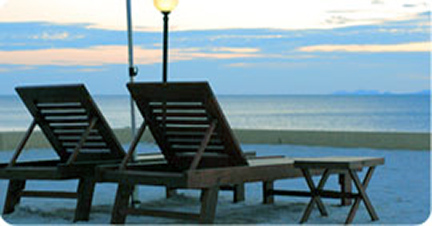
unspoiled beach, privacy, quite and peaceful
The MakeMyTrip.com website describes the resort thusly:
The Sea House Beach Resort is a modern Thai architectural-style property located on Tumbol Talingchan. This resort is accessible in about a 40-minute drive from Krabi Airport. Popular places of interest like Wat Tham Suea and Contemporary Art Museum of Krabi are within an hours drive of the property. Guests can soak up the tropical sun at the outdoor swimming pool or experience a soothing Thai massage on site. Other facilities like multi-lingual staff and free Wi-Fi are also available.
Guests can relish freshly prepared seafood, traditional Thai dishes and European delicacies at the on-site restaurant. There is a well-stocked bar present in the restaurant, where guests can have an expertly mixed cocktail. Other nearby restaurants offer a wide range of local and international dishes. Noori India Restaurant is around one hours drive from the property.
Having elegantly designed interiors with a Mediterranean style, the nine rooms and villas of the resort are furnished entirely with wooden furniture. These rooms feature wooden parquet flooring, lounge sofas, plush beds, work desk and designer lampshades. Modern amenities like flat-screen TV and telephone are provided in all rooms. Bathrooms are attached and have all essential toiletries.
Visitors are taken on a complimentary half-day tour of Krabi Town, arranged by the property.
The Sea House Beach Resort
120 Moo 4, Had Yao (Long Beach)
Tumbol Talingchan, Nuangklong
Krabi, Thailand 81130
Tel: +(66) 864 713 693 - 4,
Fax: +(66) 864 713 695
"I was introduced to this fabulous place by a widely respected NYC lawyer who played a very successful trick on me. Benjamin Pred was an Assistant District Attorney for Queens who knew I had a weakness for cool getaways, and this was the perfect bait. We got into this crazy competition about who was going to get there first. Long story short, I thought he had actually flown down to the Sea House so I thought I'd surprise him by showing up. But he was in NYC, pretending to wonder what I was doing. We were cracking up as I tried in vain to convince him to join me in paradise. But I fell in love with this place, and the people, so it's clear who got the better deal." Desi Arnold
Welcome to The Sea House 2010

The Sea House Beach Resort is one of the three properties recently opened in a new area of Had Yao, Krabi.This is an all-villa resort with a mixture of bali and modern contemporary Thai touch.
Set on the private secluded and yet unspoiled beachfront at Had Yao, The Sea House Beach Resort is an ideal choice for romantic couples,honeymooners, as well as families alike.
Our small resort is only 9 villas, 1 of which are Beachfront Private Pool Villa and 1 Beachfront Villa with its own unique layout designed for guests with varying tastes. The rests are mainly Villas , Deluxe Villas. Situated by the beach and ideal for the discerning guest who values privacy and seclusion, the Sea House Beach Resort offers a variety of villas….all set in Mediterranean decor and style.
Our beach restaurant serves a traditional Thai / Europe cuisine and fusion food. Seafood menu is available and ensure our guests of the freshest ingredients from the sea. A fine choice of wine selection is also available. Guests can simply sit back and relax by our swimming pool and enjoy the sun sets.

Location
|
The Sea House Beach Resort, Krabi is located in Had Yao (Long Beach), Krabi – a short 30-minute drive from Krabi International Airport. Had Yao or Long beach is a new area that is still naturally unspoiled. This provides an excellent getaway break for those who seek ultimate relaxation in tranquility. From Had Yao to Ao Nang, it is approximately 50-minute drive.
Krabi, Thailand’s new beach resort destination, is approximately 800 kms south west of Bangkok is easily accessible by both plane and bus. Krabi is a neighboring city to Phuket and Phang Nga, Thailand’s most famous beach and Had Yao located just 30 km. from Airport or, 35 minutes south of Krabi Town, the general area is underdeveloped and peaceful with the only communities being local fisherman villages. The beach is a long , naturally and still an unspoiled hide-away for travelers which prefer a quiet and relaxed vacation just enjoying the beach and the magnificent sunsets over the Andaman Sea
|


~~~~~~~~~~~~~~~~~~~~~~~~~~~~~~~~~~~~~~~~~~~~~~~~~
Facilities
Food and Beverage Facilities 2010
Private beach restaurant with delicious seafood selections is ready to serve guests who prefer dining on the beach, or in the exclusive confines of their suite. Opening time from 0700 hours to 2200 hours or until the last guest leaves.


Guest services and facilities 2010
| • Wireless Internet Connection (wi-fi) | • Private bathroom with bathtub |
| • Full laundry service | • Separated Rain Shower room |
| • 24-hour security | • Mini bar |
| • Car park | • Hairdryer |
| • Tour services | • Satellite TV |
| • Restaurant | • In-room safety box |
| • DVD/CD/MP3 |
RESTAURANT
Dream of gourmet delights and moonlit dining with gracious and attentive staffs to cater to your every whim...
Fine dining is offered on the beach in the open air Baracuda Restaurant. Our beach restaurant serves a traditional Thai , Europe cuisine and Thai Fusion Food. Seafood menu is available and ensure our guests of the freshest ingredients from the sea. A fine choice of wine selection is also available.Guest can simply sit back and relax by our swimming pool and enjoy the sun sets.
Baracuda restaurant serves Breakfast, Lunch and Dinner, open from 7 am to 10:30 pm daily
~~~~~~~~~~~~~~~~~~~~~~~~~~~~~
Rates and Reservation 2010
MINIMUM STAY: There is no minimum stay required. (Accept promotion) GUEST PRIVILEGES
ARRIVAL AND DEPARTURE PROCEDURE DEPOSIT & CANCELLATION POLICY
|


~~~~~~~~~~~~~~~~~~~~~~~~~~~~~~~~~
Accommodation
|
1 Beach front Pool Villas, 1 Beach front villa, 4 Deluxe villa and 3 villa ensures guests that The Sea House is definitely a resort of privacy with each accommodation equipped with individual PC computer / IPOD music player….distinctive bathroom design with natural sunlight, LCD TV, large sofa, and outside patio dining area with delightful landscape and shady trees to give character to each suite. Other interesting features in the room include roomy Queen sized beds, large clothing closet, and enough drawers for the long staying guests.
Some facts and figures about our accommodations:Villa - Area 75 sq.m.
Deluxe Villa Type A - Area 85 sq.m.
BEACHFRONT VILLA -Area 100 sq.m.
BEACH FRONT Pool Villa (with private pool and terrace) - Area 160 sq.m
|
|||||||||||||||||||||||||||||||||||||||||||||||||||||||||||


~~~~~~~~~~~~~~~~~~~~~~~~~~~~~~~~~~~~~~~
Krabi : Lovely Town, Lovely People

Krabi offers one of Thailand's most beautiful coast line, unusual limestone formations which cast extraordinary silhouettes, reaching far out into the Andaman Sea. Why not choose Krabi for your next vacation or just for a marvellous weekend journey. lf you like sun, the sea and a change from your every day routine, Krabi is the place to go. An enchanting place, all tightly packed into one tiny province.
Krabi located approximately 814 kilometers from Bangkok is Krabi Province, one of most attractive destinations in southern Thailand. Encompassing an area of 4,708 square kilometers, the western border of Krabi is the Andaman Sea, the northern borders are Surat Thani and Phang-nga Provinces, the southern borders are Trang Province and the Andaman Sea and the eastern borders are Nakhon Si Thammarat and Trang Provinces.

Krabi is an ideal getaway destination teeming with natural attractions including white sandy beaches, fascinating coral reefs, numerous large and small islands and verdant forests with caves and waterfalls. Krabi's topography is mostly mountains and highlands separated by plains in some parts. Flowing through Krabi City to the Andaman Sea at Pak Nam Sub-district is Maenam Krabi which is 5 kilometers in length.
In addition, there are several canals originating from the province's highest mountain range, Khao Phanom Bencha including Khlong Pakasai, Khlong Krabi Yai and Khlong Krabi Noi. Lush mangrove forests line the canals and the banks of Maenam Krabi particularly before it empties into the Andaman Sea. The provinces sandy soil conditions are suitable for growing various agricultural products, particularly rubber trees, palms, coconuts, cashew nuts and coffee.
Due to the influence of the tropical monsoon, there are only two seasons in Krabi; the hot season from January to April and the rainy season from May to December. Temperatures range between 17 °C and 37 °C. Krabi is administratively divided into 8 Amphoes (Districts): Amphoe Mueang, Khao Phanom, Khlong Thom, Plai Phraya, Ko Lanta, Ao Luek, Lam Thap, and Nuea Khlong. The provinces jurisdiction covers not only in-land districts and sub-districts, but also extends to more than 130 large and small islands including the world famous Phi Phi Islands.
In addition, Krabi is the location of two world class beaches Ao Nang and Hat Rai Le which offer numerous diving trips, restaurants, shops etc. Additional attractions in the province are stunning limestone cliffs and rock formations which make it a heaven for rock climbers and a National Park located approximately 40 kilometers outside of town with lakes, caves and spectacular natural scenery.
History of Krabi
Some archeologists claim that Krabi City is one of the older settlements in the country as there is archaeological evidence indicating that this area had been home to homosapiens during the prehistoric times or between 25,000 - 35,000 B. C. The assumption has been strongly supported by the discovery of stone tools, ancient colored pictures, beads, pottery and skeletal remains in the provinces cliffs and caves.
In 1200 A.D., the area was known as Ban Thai Samo, one of 12 royal cities that had a monkey as the town symbol. During this period of time, Krabi was under the rule of the Kingdom of Ligor, a city better known today as Nakhon Si Thammarat. During the reign of King Rama V (1868-1910), the community was known as Pakasai Sub-county and remained under the direct jurisdiction of Nakhon Si Thammarat province. Around 1872, King Rama V elevated Pakasai Sub-county to Krabi Province with the provincial administration office situated at Krabi-yai Sub-county (currently, the office is located near the estuary at Pak Nam Sub-district) and in 1875, ordered the separation of Krabi Province from Nakhon Si Thammarat Province.
During the present reign, the corps of civil servants, merchants, and the people of Krabi and nearby provinces have collectively organized the construction of a royal residence at Laem Hang Nak Cape which is thirty kilometers west of Krabi Town on the Andaman coast to be presented to His Majesty the King.
Origin of the name Krabi
There are two legends concerning the origin of the name "Krabi". The first is that villagers presented a large ancient sword (or krabi) that was discovered by chance to the governor. Later when a smaller, on discovering a smaller one, it was also presented to the governor. Regarded as sacred and auspicious, the governor decided to keep them in the province. As the process for the establishment of the province was still in progress, the swords were placed crossing each other in Khao Khanap Nam cave. Since then, the crossed swords have remained a part of the provincial seal. The second legend is that "Krabi" was derived from the name of a local tree known as "Lumphi". The Malay and Chinese merchants mispronunciation of the name to "Ka-lu-bi" or "Kho-lo-bi" finally resulted in "Krabi" (or sword).
Getting to Krabi
How to get there by car, bus, train, boat or plane
Krabi by Car or Bus
From Bangkok
Daily bus services leave from the new southern bus terminal in Puthamonthon Saiy II, Bangkok. Tickets are available from almost any travel agent and at hotel tour desks in the city. The journey takes about 13 hours.
From Phuket
About 3 - 4 hours depending on transport, car can be quicker than 3 hours. Hire a car, or take a minibus or local bus from Phuket's southern bus terminal. Buses leave from Phuket daily. Information regarding bus timetables, taxi or min-van shuttle services can be obtained at hotels, travel agents or Phuket Airport.
From Suratthani
Buses, taxis or mini-vans can be arranged easily at agencies in the town. Journey time to Krabi about 4 -5 hrs.
Krabi by Boat
There are no direct regular ferries from Phuket to Krabi although it is possible to charter a speedboat or similar. Daily ferries operate between Phuket and Krabi via Phi Phi Island. (This often involves changing boats at Phi Phi island) Private charter from Phuket (speedboat) is available which gets you there in around 3 hours (not recommended in low season as the sea is too choppy). Details from your local travel agent or the airport at Krabi and Phuket.
From Phuket - Phi Phi Island
The regular ferry trip takes approximately 2 hrs. During high season there are 2 scheduled trips to Phi Phi and return (early morning and lunchtime)
From Phi Phi Island - Krabi
The regular ferry trip takes 1.5 - 2 hrs, with 2 services running daily - year round. (Schedules are organised so you can travel from Phuket to Phi-Phi to Krabi in one day). Details from your local travel agent or the airport at Krabi and Phuket.
Krabi by Train
From Bangkok
There are no direct services from Bangkok to Krabi. Instead, catch a train from Hualomphong Station (Bangkok) to one of the following stations: Suratthani, Trang, or Tung Song (Nakorn Sri Thammarat Province) and catch a bus from any of these places to Krabi. Traveling overnight to Trang by train is the best option from Bangkok. Journey time approximately 12 hours.
Krabi by Plane
From Bangkok
Direct flights from Bangkok to Krabi Airport are available but schedules are subject to seasonal changes. There are 2 airline which operate this route: Air Asia and Thai Airways
From Ko Samui
Bangkok Airway operates flights between Ko Samui and Krabi (flight time 45 minutes).

More Background On The Sea House Beach Resort
TheSeaHouseBeachResort.com served for years as the primary digital identity of The Sea House Beach Resort, a small, design-driven beachfront retreat on Thailand’s Andaman coast. The website presented the property as intimate, romantic, and purposefully removed from the louder resort corridors that were transforming southern Thailand in the late 2000s. Rather than compete with mega-developments, the resort leaned into scarcity: few rooms, long empty shoreline, sunsets without crowds, and a promise that guests would feel as though they had discovered a secret.
What made the site memorable was how clearly it articulated that positioning. The language emphasized privacy, tranquility, and unspoiled nature. The resort framed itself as a refuge for honeymooners, couples, and families who wanted the beach experience without nightlife districts, jet skis, or dense retail strips. Even years later, archived versions of the website read like a time capsule from a period when Krabi was accelerating toward global recognition but still had pockets of genuine isolation.
Setting on Had Yao (Long Beach)
The property occupied a stretch of sand known as Had Yao, sometimes called Long Beach, within reach of Krabi yet distinctly apart from its busiest tourist centers. Promotional materials consistently highlighted the drive time from Krabi International Airport as short enough for convenience but far enough to create psychological distance from crowds.
Travelers familiar with Ao Nang or boat routes toward the Phi Phi Islands often described Had Yao as the opposite experience. Instead of tour desks lining the promenade, visitors encountered fishing communities, long views across the Andaman Sea, and a pace dictated by tides and sunset light. The website used this contrast deliberately. By reminding potential guests how busy Thailand’s headline destinations had become, it positioned the Sea House as the quieter, more discerning alternative.
Architectural Identity and Atmosphere
A distinctive blend of Balinese influence and contemporary Thai aesthetics formed the backbone of the resort’s brand. TheSeaHouseBeachResort.com repeatedly underscored Mediterranean styling cues inside the villas—wooden furnishings, tiled floors, shaded patios—while exterior spaces remained open to sea air and garden greenery.
Because there were only nine accommodations, architecture became part of the emotional pitch. Guests were not booking a standardized room category in a long corridor; they were choosing a self-contained environment with personality. The imagery and descriptions suggested that walking paths wound through landscaped grounds toward a beach that never felt crowded, even at high occupancy.
This fusion of design languages was common among boutique properties of the era, yet the Sea House presented it with unusual clarity. The idea was less about spectacle and more about mood: warm woods, natural light in bathrooms, terraces for private dining, and enough separation between units that neighboring conversations dissolved into ambient surf.
Scale: A Resort Defined by Small Numbers
Nine villas. The figure appeared again and again across promotional material because it explained everything else. Service could be personal. Dining could be flexible. Staff could learn preferences quickly. And the beach, by default, would remain quiet.
Room categories included garden villas, deluxe villas, a beachfront villa, and a larger beachfront pool villa. Rather than overwhelming visitors with endless tiers, the website simplified choice while still suggesting exclusivity at the top end. The pool villa in particular became the aspirational image: private water, direct sea frontage, generous interior space, and terraces made for long afternoons.
For travelers accustomed to 200-room complexes, the idea of fewer than ten units felt almost radical. It implied that availability might vanish quickly, which subtly encouraged early booking.
In-Room Experience
Descriptions of interiors read like a checklist of boutique luxury at the time: king-sized beds, satellite television, DVD/CD/MP3 capability, minibars, air-conditioning, generous wardrobes, and bathrooms designed to capture daylight. Rain showers and bathtubs were both emphasized, suggesting indulgence after sun exposure.
Several villas highlighted outdoor dining patios, reinforcing the notion that guests could remain in their own sphere without constantly returning to common areas. Privacy was not merely an amenity; it was the organizing principle of the entire resort.
Baracuda Restaurant and Culinary Positioning
Food played a central role in how the property defined itself. The on-site venue, often referred to as Baracuda Restaurant, promised Thai cuisine, European dishes, fusion interpretations, and—most prominently—fresh seafood. The restaurant’s beachfront placement meant that meals were accompanied by sea views and evening color shifts across the horizon.
Operating from early morning through late evening, the restaurant functioned as more than a dining room. It was the social heart of the resort, the place where honeymoon couples lingered over wine, families gathered after excursions, and solo travelers could converse with staff.
Wine selection and cocktails were highlighted repeatedly. This detail signaled an attempt to court international tastes while maintaining local authenticity.
Services and Guest Privileges
TheSeaHouseBeachResort.com devoted substantial space to inclusions. Complimentary wireless internet, bicycles, canoes, breakfast for two, welcome drinks, and scheduled shuttles to regional attractions created a perception of strong value relative to nightly rates.
One particularly interesting feature was the promise of organized outings—half-day trips into town or transport toward natural landmarks. These benefits reduced the friction of staying in a remote location. Guests could enjoy isolation without sacrificing access.
Rates and Promotional Strategy
Archived rate tables reveal a classic seasonal model: low, high, and peak periods tied to weather and holiday travel. Discounts, minimum-night conditions, free cocktails, and airport transfers appeared as incentives designed to capture early bookings in competitive months.
For a boutique resort, transparency about pricing helped build trust. Visitors could compare categories easily and understand how upgrades translated into beachfront access or private pools.
Target Audience
The language of romance permeated the site. Honeymooners and couples were central, but families were also welcomed, particularly those seeking calm rather than nightlife. The promise was safety, beauty, and manageable scale.
Because of its size, the resort implicitly appealed to travelers who disliked anonymity. Repeat guests, small celebrations, and word-of-mouth referrals became natural growth channels.
Guest Impressions and Storytelling
Testimonials circulated online about the warmth of staff and the humor of discovering such a quiet place. Stories of friends daring each other to arrive first or surprising companions with remote getaways reinforced the sense of adventure. Whether playful or sincere, these narratives humanized the brand and suggested emotional return on investment beyond scenery.
Relationship to Greater Krabi
Even while celebrating seclusion, the website contextualized the resort within the broader appeal of Krabi province: limestone formations, island-hopping, hot springs, mangroves, and climbing cliffs. By educating visitors about regional geography, the property presented itself as a strategic base rather than an isolated gamble.
Guests could retreat when they wished and explore when curiosity called.
Ownership and Management Character
While corporate details were modest, the communication style implied hands-on leadership typical of independent Thai hospitality ventures. Emphasis on friendliness, flexibility, and custom arrangements suggested that decisions happened on property, not in distant headquarters.
Media and Online Travel Platforms
As global booking engines expanded, listings began appearing on travel portals that summarized amenities, distances, and room features. These aggregators broadened visibility far beyond direct website visitors, introducing the Sea House to travelers who might never have encountered Had Yao otherwise.
Cultural and Social Significance
The Sea House represents an era when smaller resorts helped define Thailand’s reputation for boutique luxury. Before influencer culture and algorithmic marketing dominated travel discovery, places like this thrived on evocative descriptions, archived photographs, and traveler recommendations passed between friends.
Its online legacy provides insight into how early independent hoteliers balanced authenticity with international expectation.
Enduring Memory
Even if travelers never visited, browsing the old pages could inspire a sense of possibility. The combination of limited inventory, quiet beaches, and sunset dinners formed a powerful fantasy. For many, that imagination alone cemented the resort’s place in Krabi’s hospitality narrative.